Why Carbocene

Biological value should be determined by what works in the world.

Carbocene is an independent plant-biotechnology organization developing productive biological systems and the scientific, field, and institutional capacity required to test their consequences in the world.

Regulation, financing, markets, and organizational constraints matter. But they should shape how useful biology reaches the world—not determine in advance what biology is allowed to count as valuable.

The structural problem

Institutional legibility is not the same as biological value.

Plant biotechnology has to pass through scientific, regulatory, financial, commercial, and organizational systems before it can affect the physical world. Those systems are necessary, but each sees only part of the problem.

A trait can be biologically powerful while being difficult to finance or regulate. Another can fit existing institutional pathways while producing weaker physical outcomes. When those categories are confused, the requirements of the institution begin to determine what is treated as biologically valuable.

Carbocene treats regulation, propagation, field performance, financing, standards, market structure, and long timelines as constraints to specify and work through—not as substitutes for evidence about what the biology actually does.

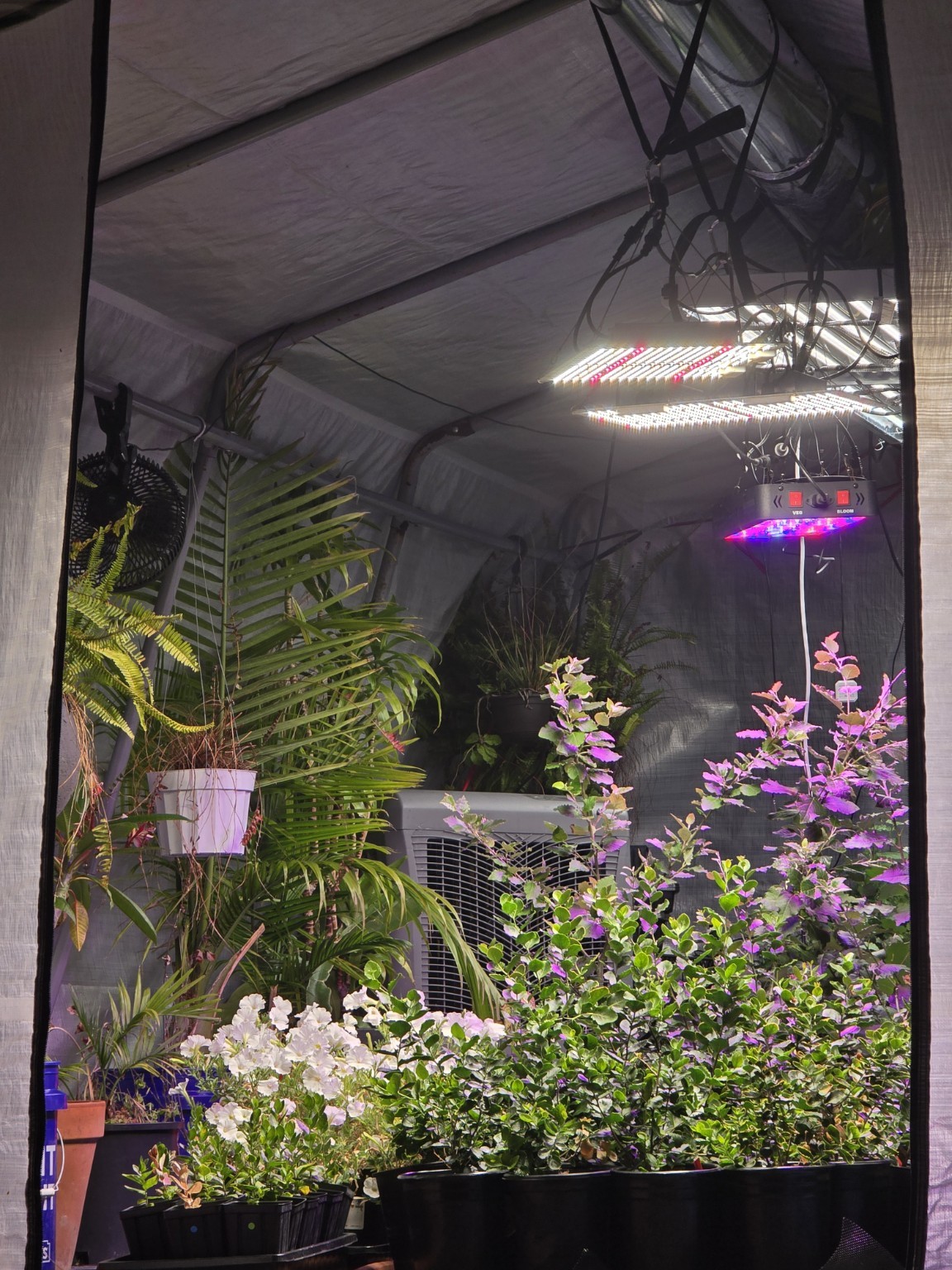
Plants and growing systems inside Carbocene’s Oakland research greenhouse
Greenhouse work connects biological development with the conditions required for field use and measurement.

Carbocene’s response

Keep biological claims answerable to physical outcomes.

Plant biotechnology does not end when a trait works in a controlled experiment. Its biological meaning changes as it enters propagation systems, field environments, management regimes, ecological communities, material uses, and regulatory systems. Carbocene treats these stages as parts of the same scientific problem.

Field performance, biomass, carbon assimilation, materials, ecological interaction, propagation, management, and long-term behavior provide evidence that laboratory demonstrations alone cannot.

Continuity matters because biological questions often take years to answer. But continuity is infrastructure, not the objective. The objective is to give promising biological systems enough scientific and institutional capacity for their actual value to become knowable and useful.

Propagation systems, nursery practice, biological inventory, field methods, measurement, records, facilities, and working relationships connect biological design with consequential use.

The aim is affirmative and material: generate relevant evidence, create physical and economic value, and widen the range of pathways through which useful plant biotechnology can reach consequential use. Living examples and public field evidence can change what regulators, institutions, landholders, partners, and future developers understand as possible.

An institutional lesson

The institution must remain answerable to the biology.

Biotechnology institutions necessarily work through representations: regulatory categories, financing models, product definitions, milestones, market forecasts, and measurements. These tools make coordinated action possible. They become dangerous when success within the representation begins to stand in for success in the underlying physical system.

Carbocene is designed around the opposite ordering. Biological efficacy and physical outcomes remain primary. Financing, regulation, commercialization, philanthropy, licensing, and partnerships are different mechanisms for carrying useful biology forward.

Carbocene builds on years of plant-biotechnology research initiated at Living Carbon, including engineered aspen and conifer programs. When Living Carbon discontinued development and commercialization of its synthetic-biology tree program, Carbocene was established in its present nonprofit form as an independent pathway for continued research and new development.

By that transition, the work already extended from industrial propagation and repeated lead-event validation to replicated field experiments, advanced loblolly pine (Pinus taeda) event selection, and functioning eastern cottonwood (Populus deltoides) transformation. The institutional pathway changed; the biological questions remained.

Carbocene’s intellectual origins precede Living Carbon. Patrick Mellor began developing the framework at the 2019 Foresight Planeteers workshop around biological productivity, carbon flux, decomposition, durable materials, and the integration of engineered plants into larger physical systems. He subsequently developed the work with Linda Maepa and Rob Ferber. Living Carbon became one important setting in which parts of this program were developed. Carbocene now pursues the broader program independently.

Regulatory categories, financing models, product definitions, and organizational milestones matter because they shape how useful biology reaches the world. They should not substitute for the question of whether the biology itself works.

Commercial products, licensing, industrial partnerships, grants, philanthropy, and productive land use can each support continued development.

A broader continuity problem

Successful biology can outlast its first institutional pathway.

Major programs have developed serious experimental biology at universities, research institutes, restoration organizations, and public agencies. Their routes to durable use remain long, institutionally complex, and sometimes reversible.

RIPE — Realizing Increased Photosynthetic Efficiency

Led from the University of Illinois Urbana-Champaign since 2012, RIPE is a major international effort engineering photosynthesis in food crops. Its work spans photorespiration, recovery from photoprotection under fluctuating light, Calvin-cycle and photosynthetic-capacity interventions, transformation, phenotyping, and replicated field experiments in crops including soybean, cowpea, cassava, rice, and maize. RIPE’s published history lists $117 million in successive investments from the Gates Foundation, the Foundation for Food & Agriculture Research, the U.K. government, and Gates Agricultural Innovations. Moving successful traits into locally relevant crop varieties still requires regulatory review across jurisdictions, seed multiplication, distribution, farmer adoption, and institutions able to carry each trait through that transition.

Salk’s Harnessing Plants Initiative

Based at the Salk Institute in La Jolla, California, the Harnessing Plants Initiative engineers crop root systems to increase root mass and depth and to increase suberin, a carbon-rich tissue intended to place more carbon into relatively persistent belowground pools. The program has attracted major philanthropic investment, including a $50 million gift from Hess Corporation. In 2022, Salk helped launch Cquesta to move root-trait discoveries into commercial germplasm, broader field testing, trait licensing, seed-company distribution, and farmer use. Creating that separate deployment organization shows that advanced engineered plants inside a research institute did not automatically acquire a route to routine cultivation.

Blight-resistant American chestnut

SUNY College of Environmental Science and Forestry has pursued a decades-long restoration-biotechnology program for American chestnut, using an oxalate oxidase, or OxO, approach to confer tolerance to chestnut blight. Its leading release pathway was badly disrupted when the program discovered that trees represented in the federal petition as the Darling 58 transformation event were actually Darling 54. This was a lineage-identity and control failure with large institutional consequences, not evidence that engineered plants are intrinsically unknowable. SUNY ESF revised the petition, and USDA APHIS reopened public comment on the corrected Darling 54 review in 2025.

Golden Rice

Golden Rice was developed by Ingo Potrykus and Peter Beyer to produce beta-carotene, a source of provitamin A, in rice endosperm and was later advanced by the International Rice Research Institute and the Philippine Rice Research Institute to address vitamin A deficiency. The Philippines approved commercial propagation in 2021, registered the first variety in 2022, and began pilot-scale planting and seed multiplication. In 2024, the Court of Appeals revoked the propagation permit. PhilRice reports that propagation remains on hold while its appeal is pending before the Supreme Court. The history shows that even biotechnology which progresses through approval into field deployment can lose the legal and institutional conditions required for that deployment to continue.

These programs occupy different points in the long interval between successful biology and durable use. RIPE and Salk have produced substantial experimental biology while routine cultivation requires further translation. American chestnut shows how lineage control and institutional trust can destabilize a program near release. Golden Rice shows that approval and initial deployment do not guarantee continuity.

A deployable counterexample

Deer offers a chance to demonstrate a different outcome.

Deer begins on the other side of a barrier that stops many engineered plants. It is not subject to USDA plant-pest regulation under 7 CFR part 340, so Carbocene can propagate it and establish new plantings within the license scope without first obtaining a biotechnology environmental-release permit.

That position allows Carbocene to follow engineered trees under ordinary cultivation conditions, maintain responsibility for their stewardship, and accumulate evidence across growth, survival, phenology, management, coppice response, ecological interaction, carbon accumulation, and site variation.

Long-term field evidence from Deer cannot determine the regulatory status or safety of a different future construct. It can change the empirical starting point from which engineered-tree deployment is understood by demonstrating what responsible deployment, monitoring, and stewardship look like in practice.

Deer provides this deployable field platform while Photosynthetic Systems Engineering develops the next generation of independently owned Carbocene technologies. If the record grows over time, the case for Carbocene becomes more than an argument that valuable biotechnology needs somewhere to persist: it becomes a living example of what sustained biological and institutional capacity makes possible.

From argument to experiment

Ideas became organisms, experiments, and field systems.

Patrick’s earlier writing developed the deep-time argument behind the work: biological innovation has repeatedly altered atmospheric carbon, ecological conditions, and the possibilities available to later life.

Carbocene’s current Deep Time reconstruction and harmonized source dataset extend that historical line of inquiry as a present scientific artifact. They frame causal and systemic questions; they do not establish the efficacy or safety of a particular engineered plant.

Patrick subsequently helped turn part of the broader argument into engineered trees, experimental programs, propagation systems, and operational field deployments. Authored essays, peer-reviewed controlled-environment research, and independent scientific reporting document that movement from argument into biological engineering and field evidence. The operational record spans propagation, nursery scaling, field trials, planting, measurement, field evaluation, and consequential use.

Current Carbocene scientific artifact

Deep Time reconstruction

A multiscale reconstruction of climate, atmospheric composition, ocean chemistry, and biological change across Earth history.

Explore the current reconstruction

Forests 14(4), 827

Enhanced Photosynthetic Efficiency for Increased Carbon Assimilation and Woody Biomass Production in Engineered Hybrid Poplar

Controlled-environment proof-of-concept research in engineered hybrid poplar.

Read the peer-reviewed paper

Science

To fight climate change, a biotech firm has genetically engineered a very peppy poplar

Independent reporting on the experimental results and scientific limitations.

Read the Science report

The New York Times

For the First Time, Genetically Modified Trees Have Been Planted in a U.S. Forest

Reporting on the field-planting milestone.

Read The New York Times report

Earlier writing

Responsibility at planetary scale.

“An Edenic interpretation of the preindustrial climate, coupled with a lack of understanding of what humans are actually doing, on an energetic level, with our recent rerouting of the carbon cycle, has led to the positioning of climate change among a general class of ‘environmental’ problems, and a lack of recognition of the epochal significance of a single species’ wholesale liberation of energy stored for a significant fraction of the history of the Earth in such a short time period as 200 years.

This act by our species also confers on us the responsibility to manage global carbon flux in general for the foreseeable future, and this represents a movement toward homeostatic metabolism for the biosphere as a whole.”

Patrick Mellor, “From Carboniferous to Carbocene,” The Ecology of Arcadia

Published foundations

The writing behind the institution.

These Palladium articles present the planetary and biotechnology arguments that inform Carbocene’s work. Their longer source essays are linked with each article.

Beyond Arcadian and imperial ecology

Human influence is already part of the Earth system.

Carbocene does not seek restoration of an imagined static prehuman equilibrium, separation of humanity from nature, or complete managerial control over simplified living systems.

The question is whether intervention simplifies and degrades living systems or improves their functional connectivity, energy retention, resilience, and capacity for future development.

Living systems capture energy, retain it, recursively transform it, and use it to generate further organization. Narrow efficiency can be destructive when it accelerates throughput while reducing the function and future capacity of the larger system. The ethical direction is systemic functional improvement: greater retention, communication, reciprocal organization, and room for living systems to adapt.

In practice, that means judging interventions not only by immediate yield or carbon accounting, but by what they do to productivity, ecological relationships, resilience, material persistence, and future biological possibility.

We work toward ecologies in which human knowledge becomes a responsible participant.

The long horizon

The living world and human possibility are one project.

The sunflower forest and the road across the star fields depend on one another. A civilization that destroys its living foundation cannot sustain a longer future. A civilization that abandons knowledge, ambition, and coordinated action cannot protect that foundation at the required scale.

“I know that we exist in the morning twilight of humanity and pray that we survive its noon....If we go down now I do not believe we will ever again have the resources or the strength to defend the sunflower forest and simultaneously to follow the beckoning road across the star fields. It is now or never for both, and the price is very high.”
— Loren Eiseley, The Invisible Pyramid, 1970

Why nonprofit?

Some necessary stages of biological development do not finance themselves efficiently.

Field development can create substantial public, scientific, physical, and eventual commercial value before it produces a sufficiently immediate or concentrated private return.

Intermediate-scale development

Work between laboratory demonstration and large-scale use, where biological performance, ecological consequences, materials, and productive applications can be tested.

Multiple forms of value

Pursue public, scientific, physical, ecological, and eventual commercial value without forcing every stage into one return profile.

Patient evidence

Measure biological and material outcomes across the seasons, sites, and regulatory timelines the work actually requires.

Revenue and licensing

Use appropriate licensing, revenue, and industrial partnerships to support continued mission-driven development.

Program partnerships

Build the scientific, landholder, philanthropic, and industrial relationships required for larger deployment programs.

Long-horizon technical capacity

Maintain biological inventory, propagation systems, field practice, measurement, facilities, records, and practical knowledge across the timescales living systems require.

Carbocene Industries is an independent 501(c)(3) nonprofit organization. Carbocene Industries owns and operates carbocene.org. Its Charity ID / EIN is 33-1631522, and its physical address is 7046 Outlook Ave, Oakland, CA 94605.

See the work

Carbon drawdown, durable materials, and resilient ecosystems.

See how Carbocene turns these purposes into specific biological systems, research programs, and measurable physical questions.

Explore the Research