Independent and community researchers
Botanists, plant scientists, DIY biologists, biohackers, and independent biological researchers.

Participate
Carbocene operates a licensed California nursery, research greenhouse, and field site in Oakland. Public participation is part of the institution’s scientific life: people can work with plants, materials, carbon, permaculture, and ecological questions through practical activity grounded in ongoing projects.
No laboratory or gardening background is required. Activities are structured so newcomers and experienced contributors can work alongside one another.
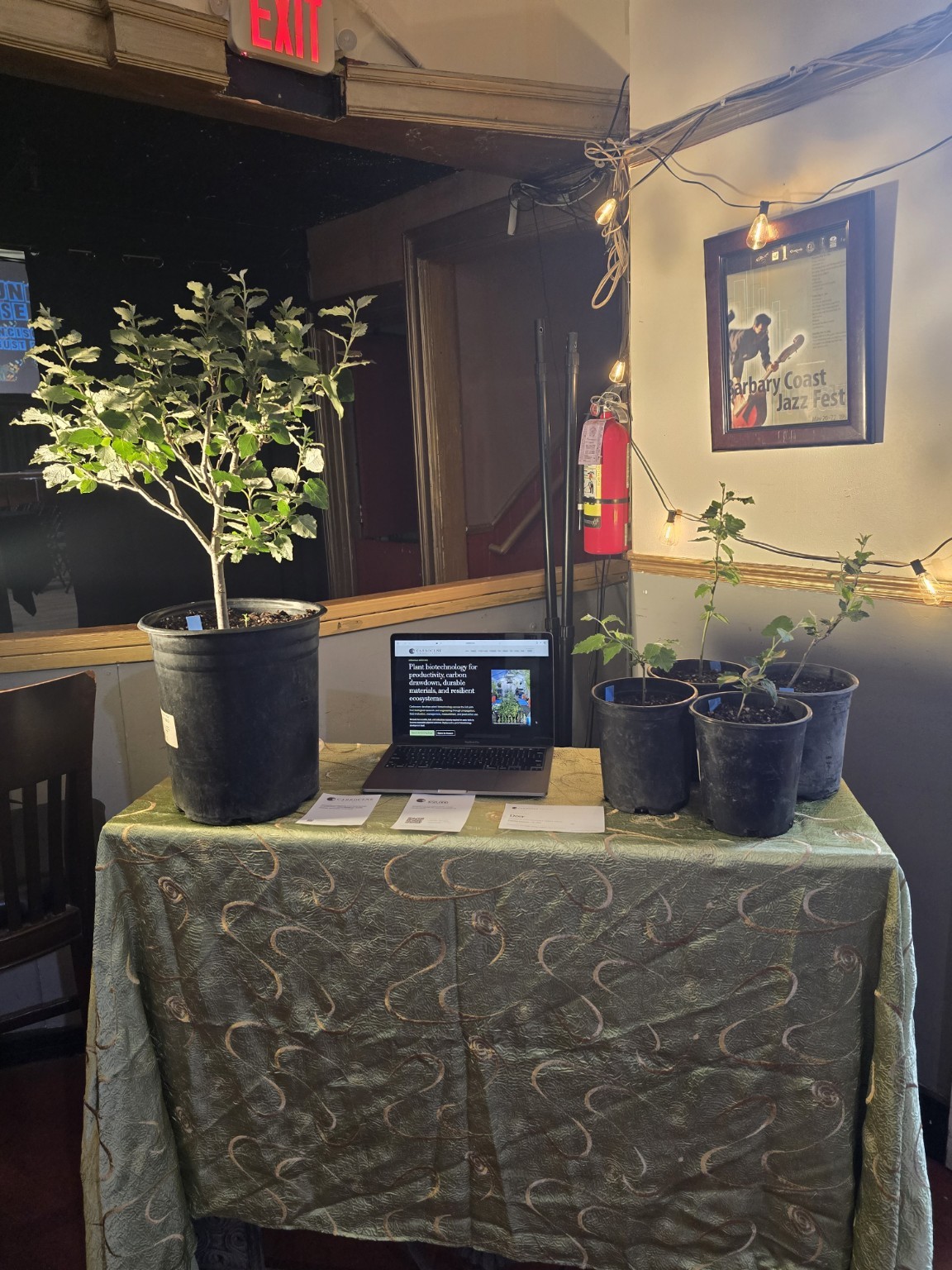
Biopunk Greenhouse
Spend an afternoon inside Carbocene’s working Oakland greenhouse and field site. We will propagate plants, make biochar, care for a living research collection, and explore how plant biotechnology can be practiced in an independent research setting alongside conventional scientific institutions.
Each gathering combines teaching, discussion, and practical work based on what the plants and projects need that week.
Learn About the GreenhouseCommunity biology
Practical participation includes stewardship, documentation, biosafety, and scientific responsibility.
Botanists, plant scientists, DIY biologists, biohackers, and independent biological researchers.
Gardeners, restoration practitioners, artists, and builders working with bamboo, wood, fibers, pigments, or biomaterials.
Students and early-career researchers looking for practical experience with living systems.
Visiting scientific organizations
Carbocene hosts visiting teams from nonprofit biotechnology, conservation technology, and mission-driven research organizations. Visits compare stewardship of living research collections, scientific questions, and possible work across institutions.
Scientists and organizational leaders interested in visiting the greenhouse can contact Carbocene to arrange a conversation.
Stewardship placements
A limited number of plants may be available through separately arranged nonprofit research, education, conservation, field observation, or stewardship placements.
Distributed placements preserve biological time, spread custodial risk, and create opportunities for long-term observation. Availability depends on the plant line, intended use, receiving person or institution, and applicable contractual, regulatory, biosafety, documentation, and ecological requirements.
Scientific collaboration
Carbocene is interested in collaborations involving plant transformation, tissue culture and regeneration, plant physiology, greenhouse and field evaluation, forestry and restoration, construction bamboo, material testing, pigments and polymers, carbon mineralization, biochar, aspen coppice systems, and ecological monitoring.
Collaborative work is developed with clear terms for plant custody, intellectual property, publication, funding, responsibilities, and long-term stewardship.
Historical field provenance
If you hosted or worked with photosynthesis-enhanced poplar from the earlier program, Carbocene would like to hear from you. Historical planting information, photographs, measurements, and current survival observations can help reconstruct a distributed field record whose scientific value increases with time.
Please share only information you are permitted to share. Do not send plant material or confidential records. Any further measurement, sampling, propagation, or site work would be undertaken only after the relevant permissions and material rights are established.
Institutional participation
Carbocene welcomes scientific partners, field sites, greenhouse and propagation capacity, material testing, landholders, funders, foundations, family offices, and other organizations able to support larger biological programs.
If you know a person or institution that should understand Carbocene’s work, a direct introduction can be consequential.