
October 31, 2025
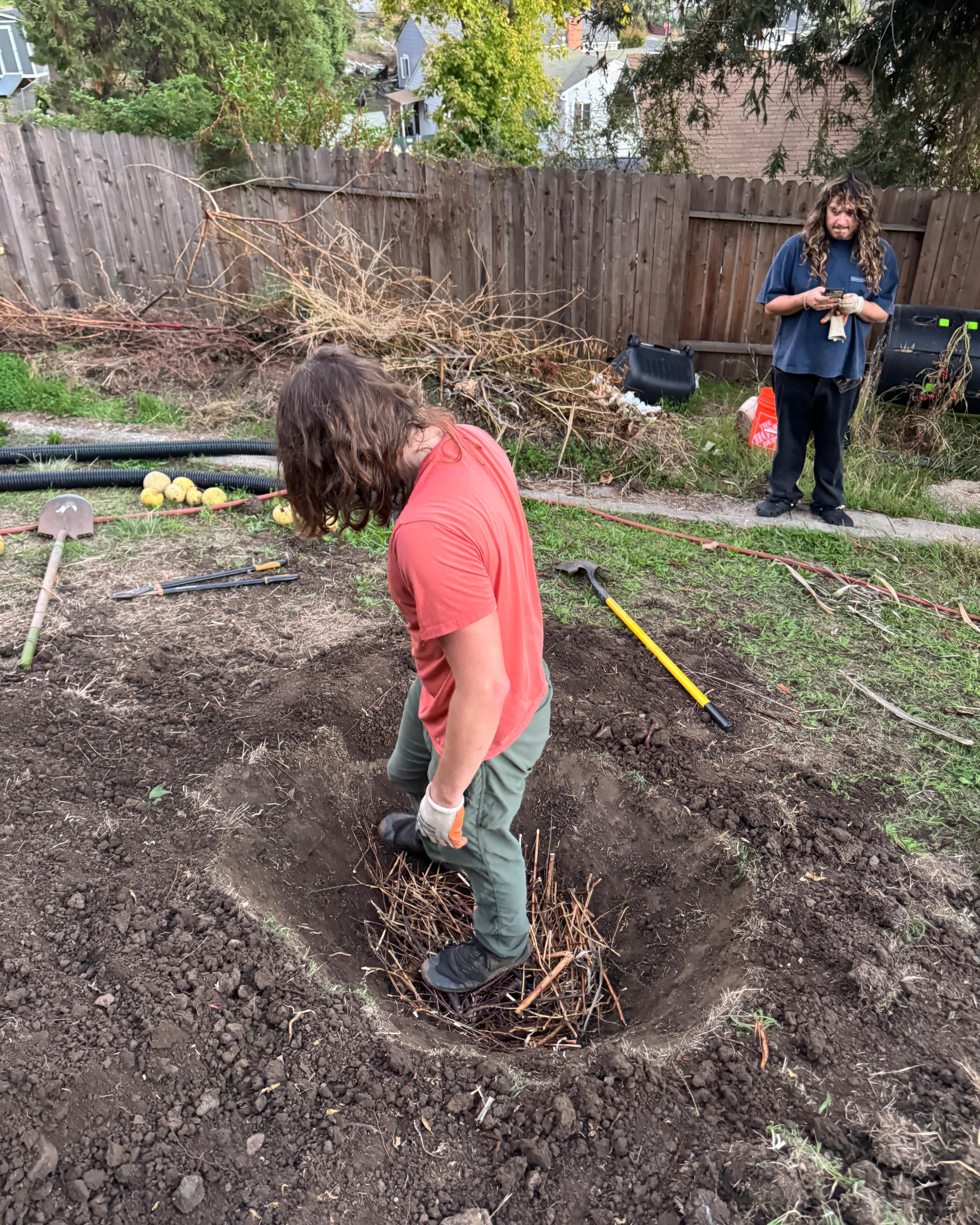
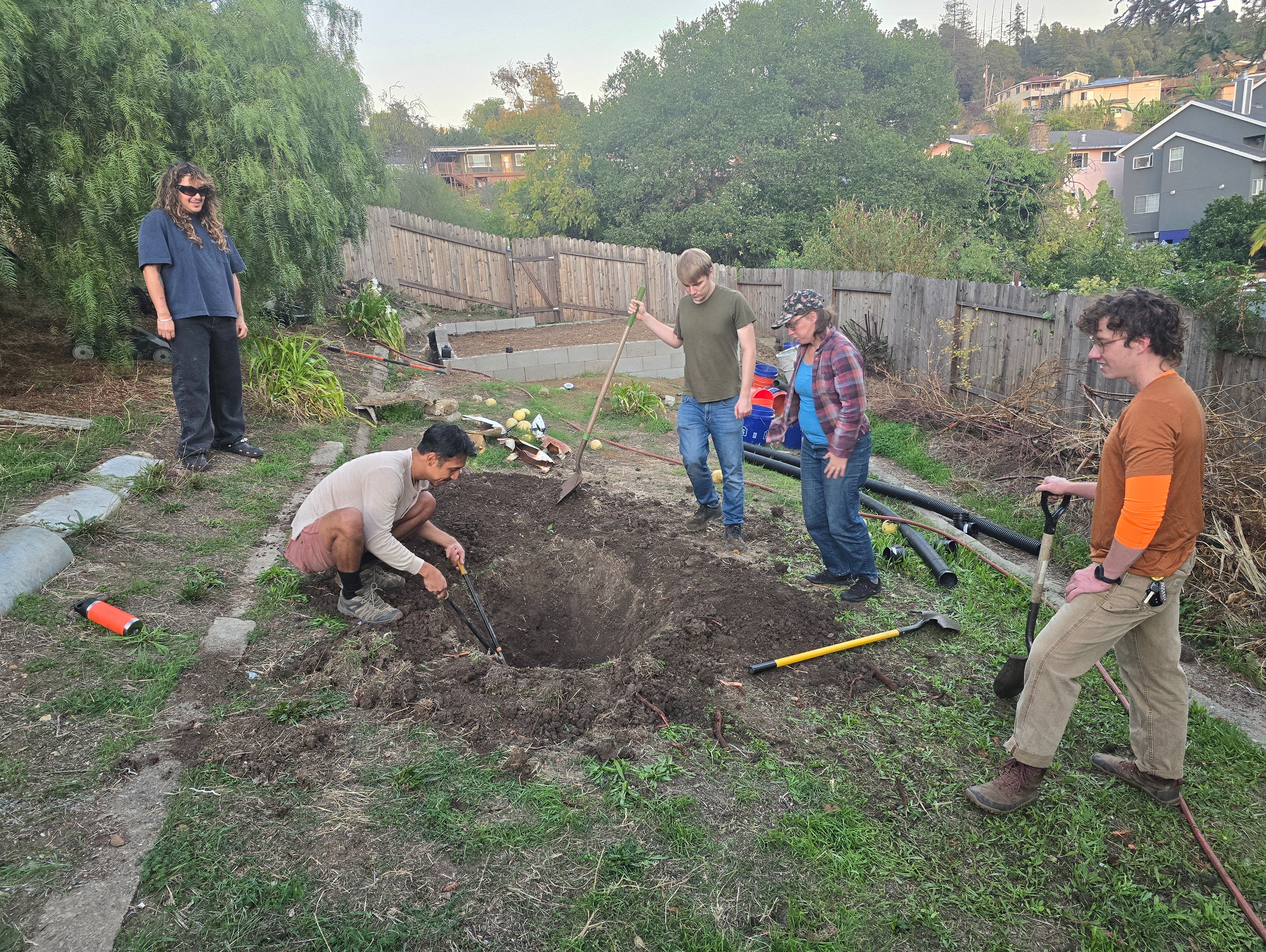

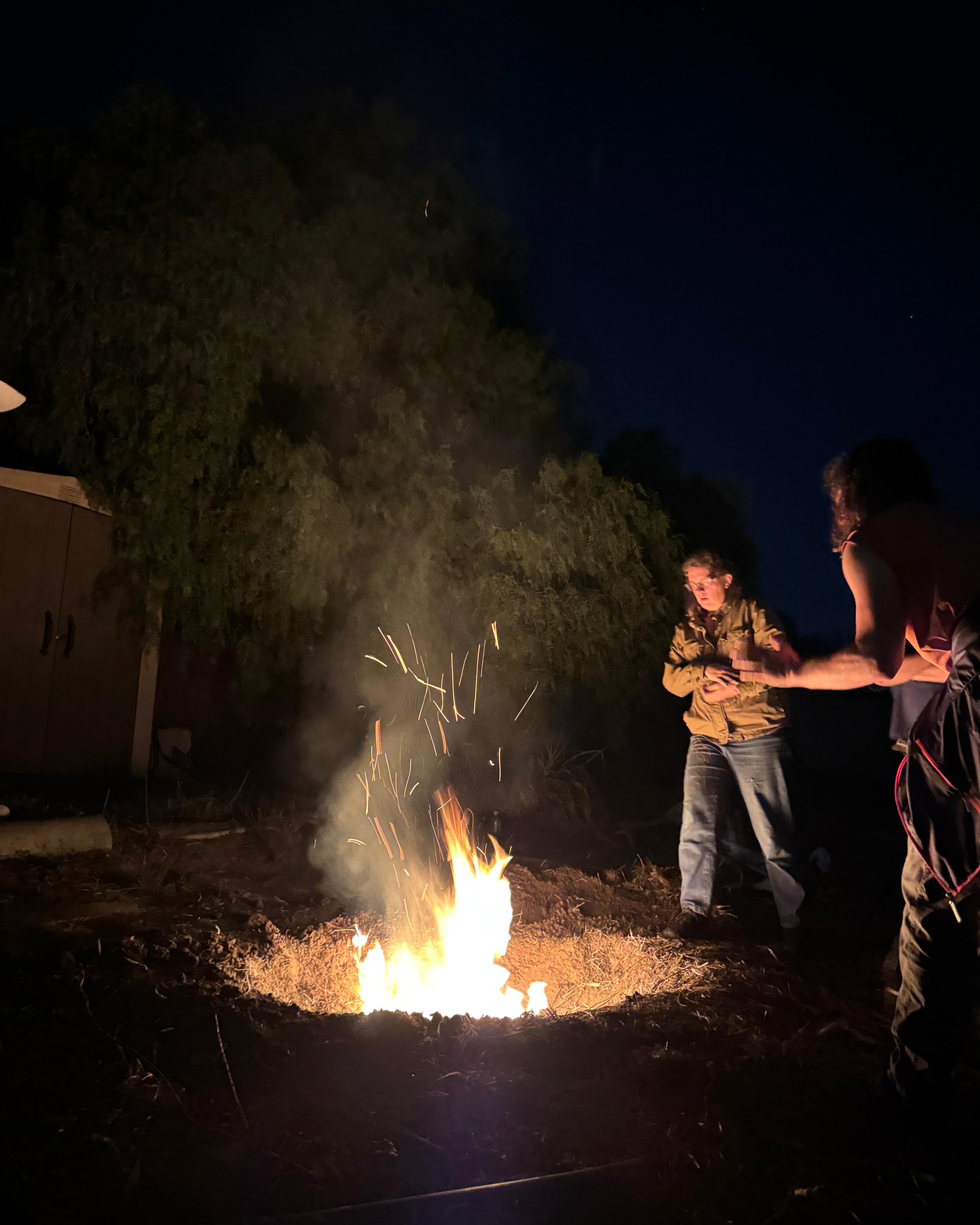
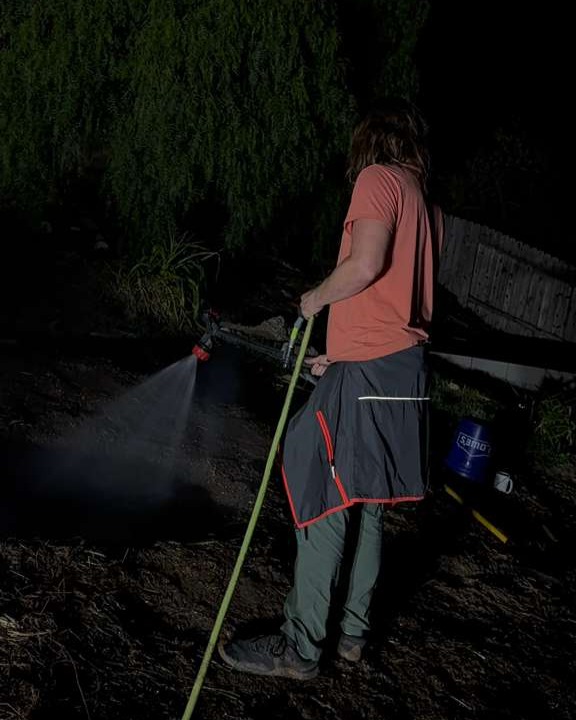
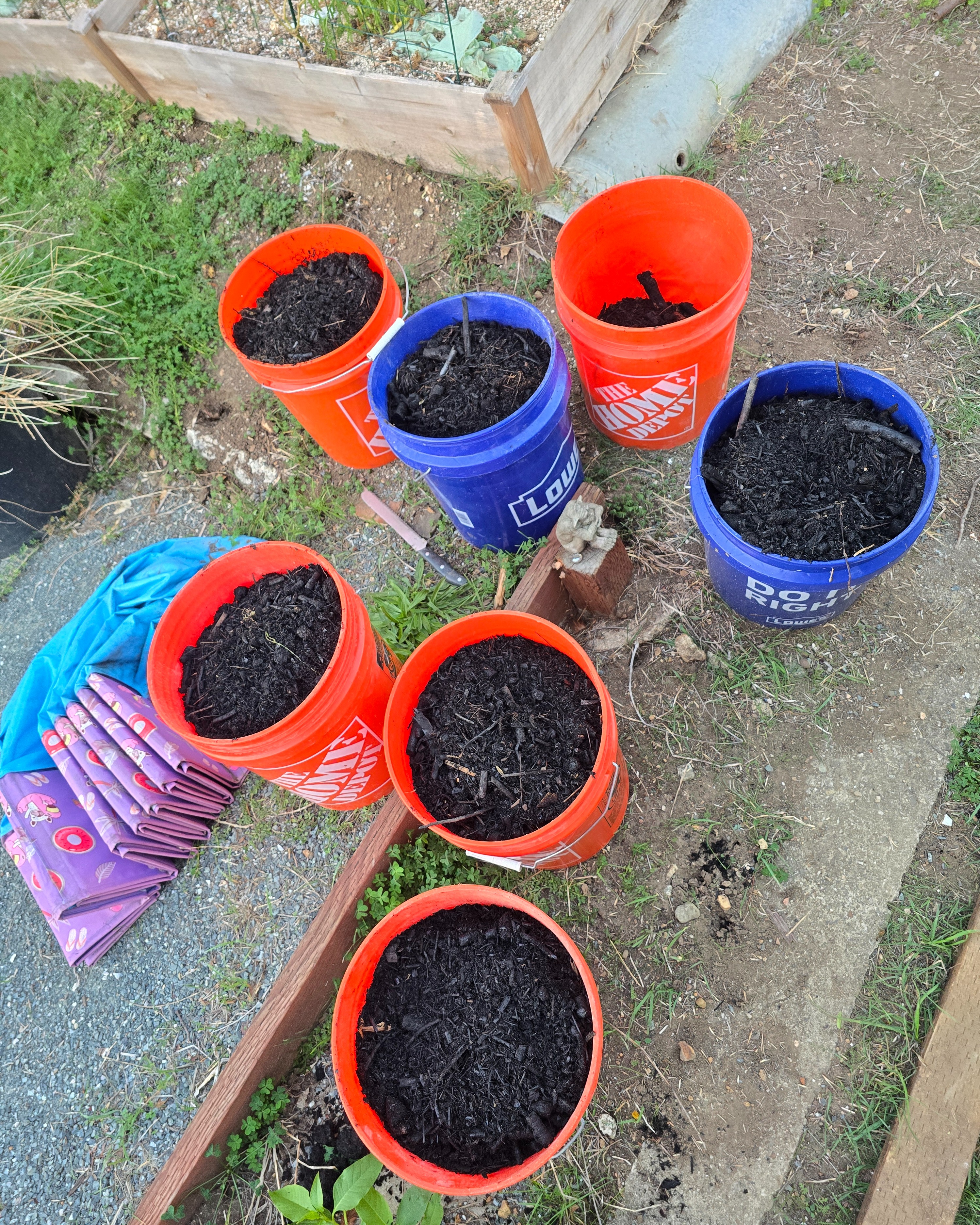
Much progress since last update!
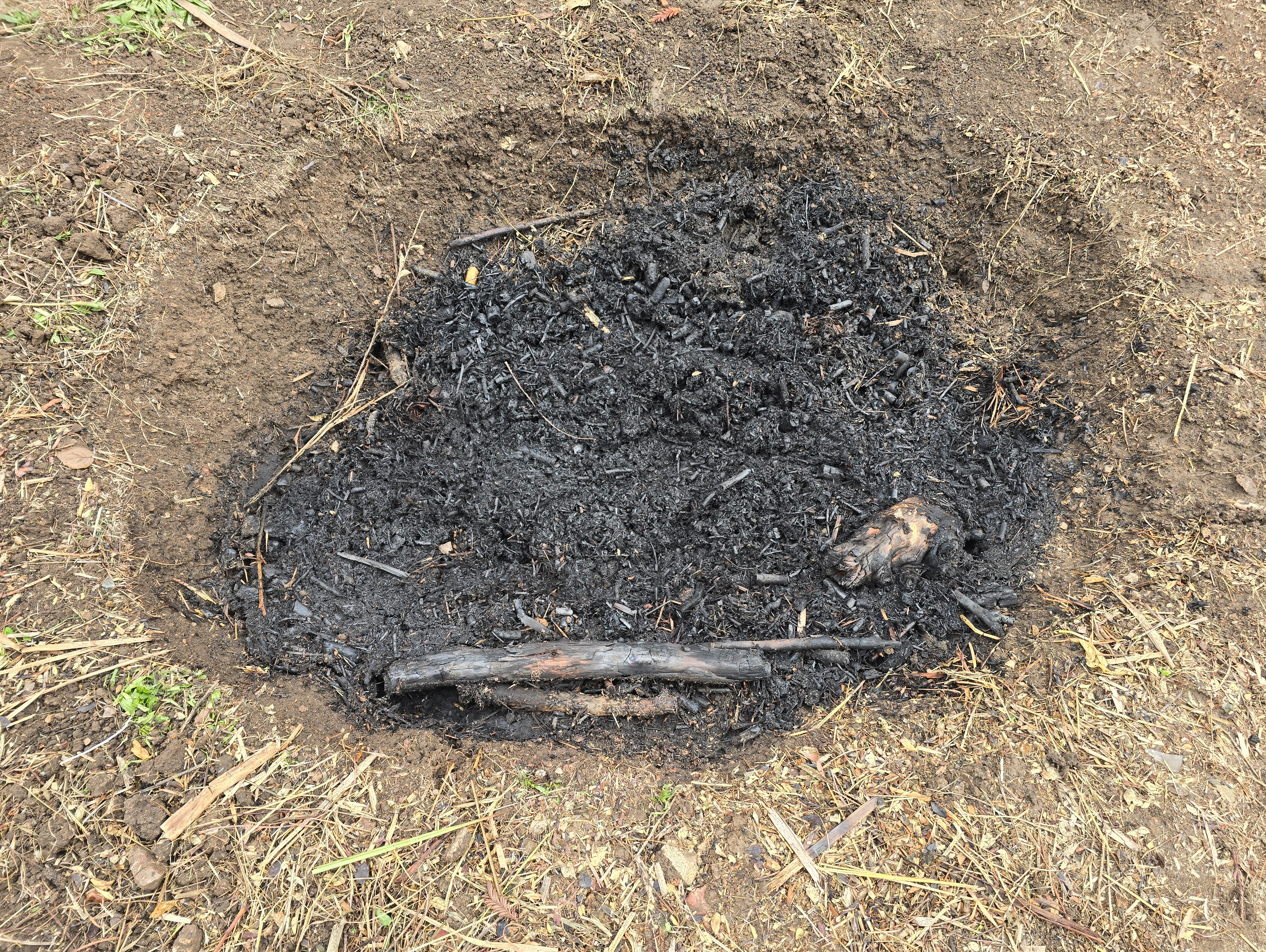
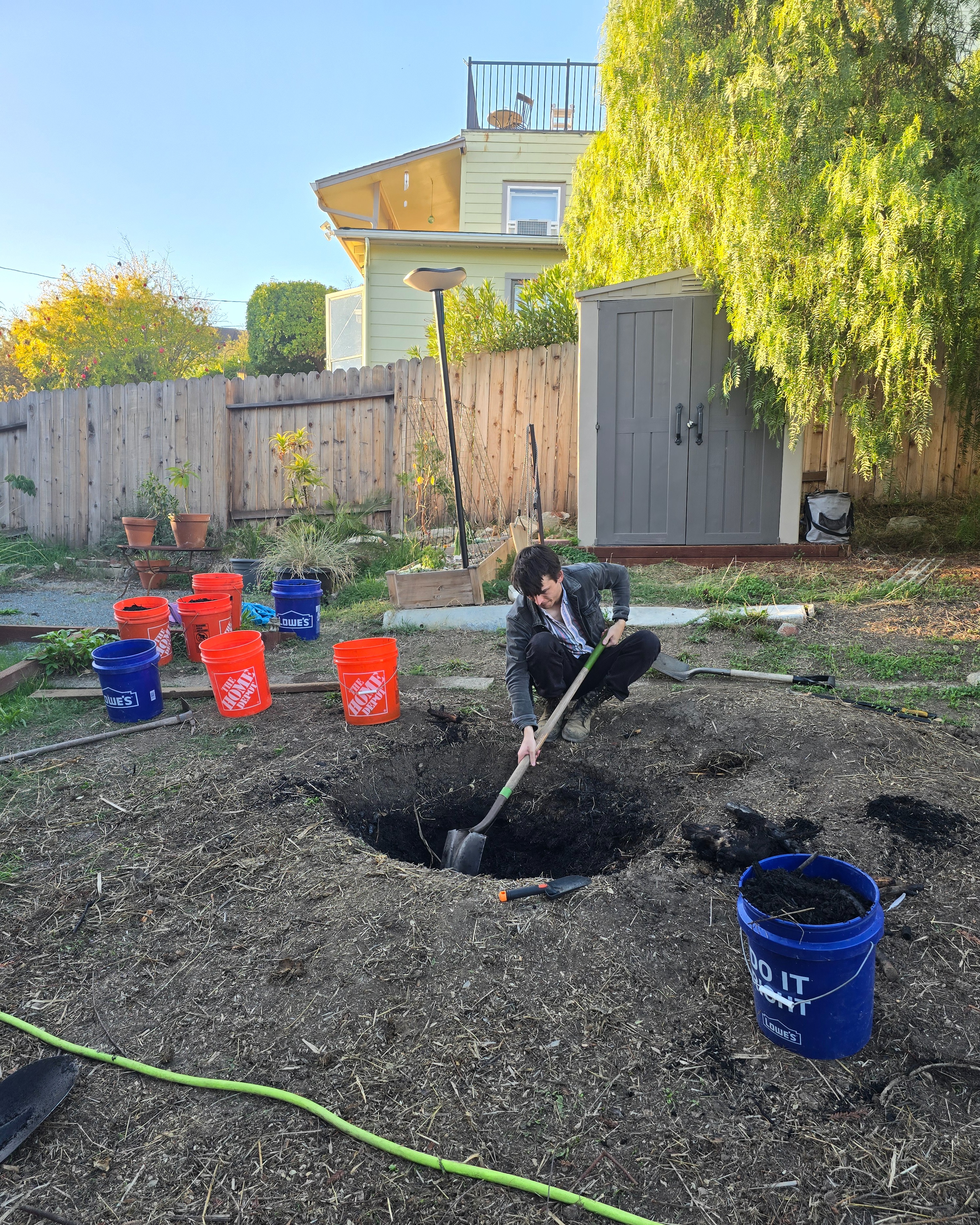
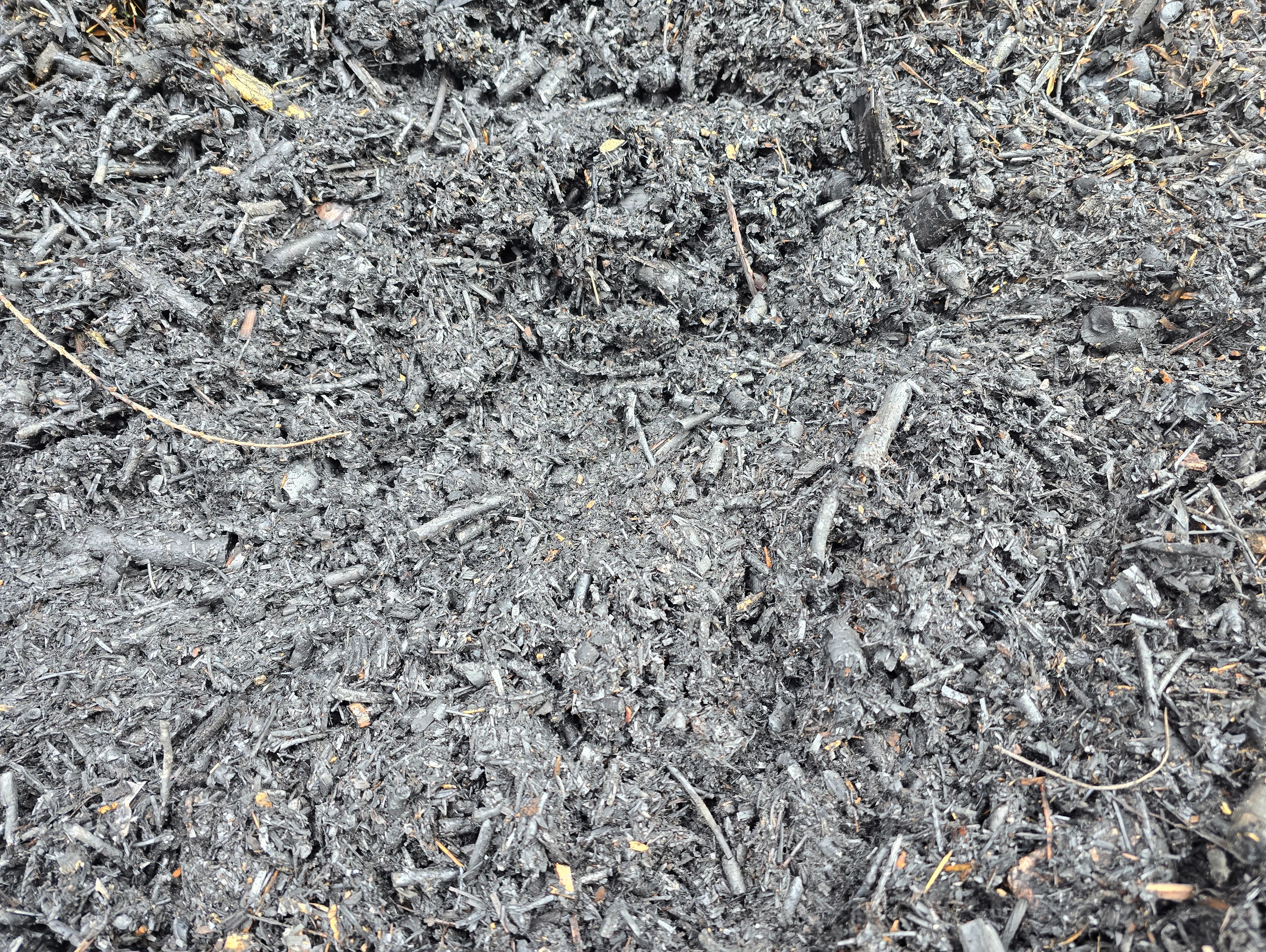
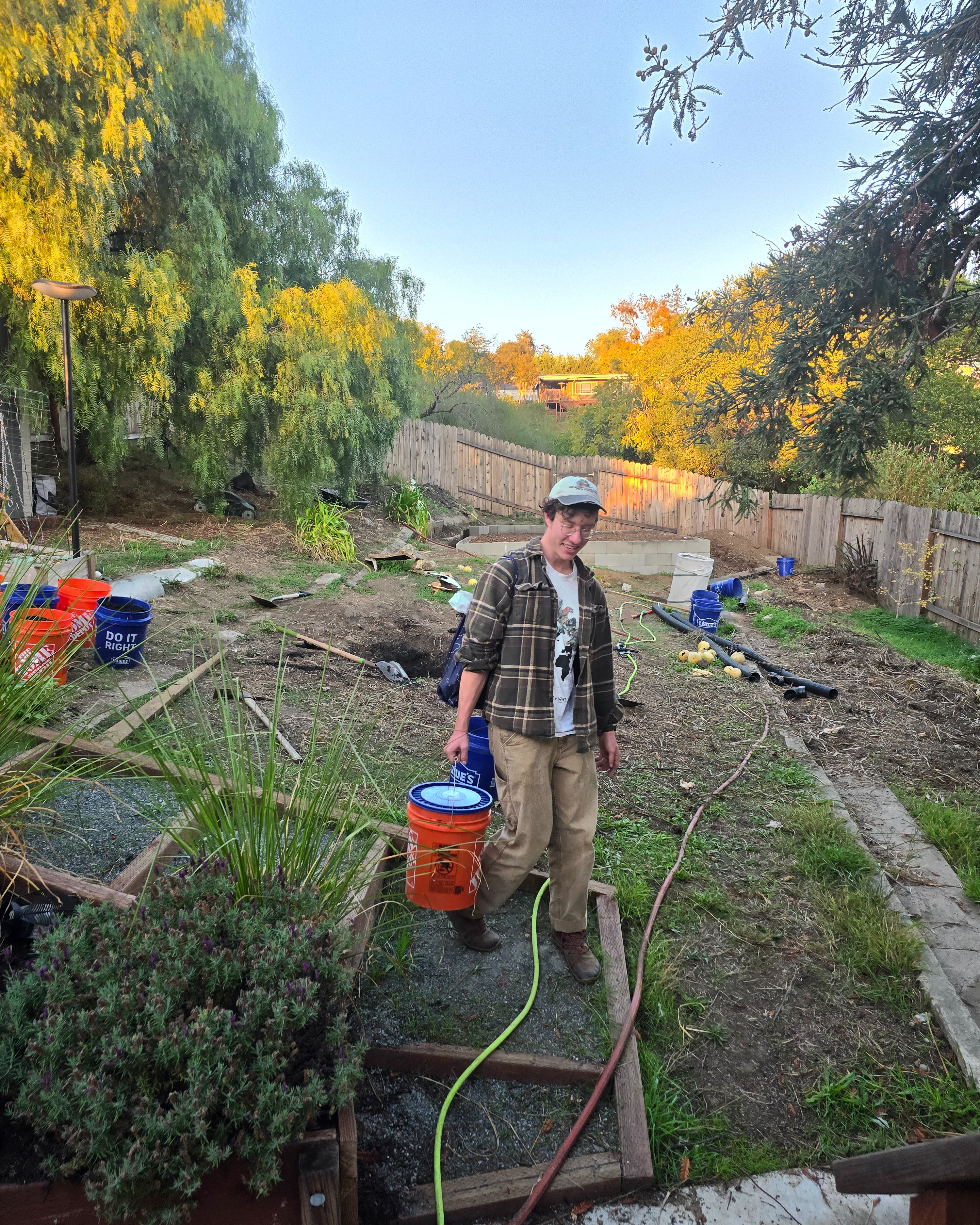
We pyrolyzed half the biomass on halloween night, yielding around 120 liters of carbon. We dug a conical burn pit and continued adding biomass in layers until the pit was full of char, this took several hours and quite close attention but is definitely a viable process. We distributed char to community members and the Gill Tract farm, and saved enough to mix with our compost for the greenhouse trees. Another burn will convert the remainder of the biomass into permanently sequestered carbon. Efficiency calculations coming soon! Thank you Elysha, Victor, Nick, Harrison, Bryce, Joe and everyone else who has supported us!
September 14, 2025
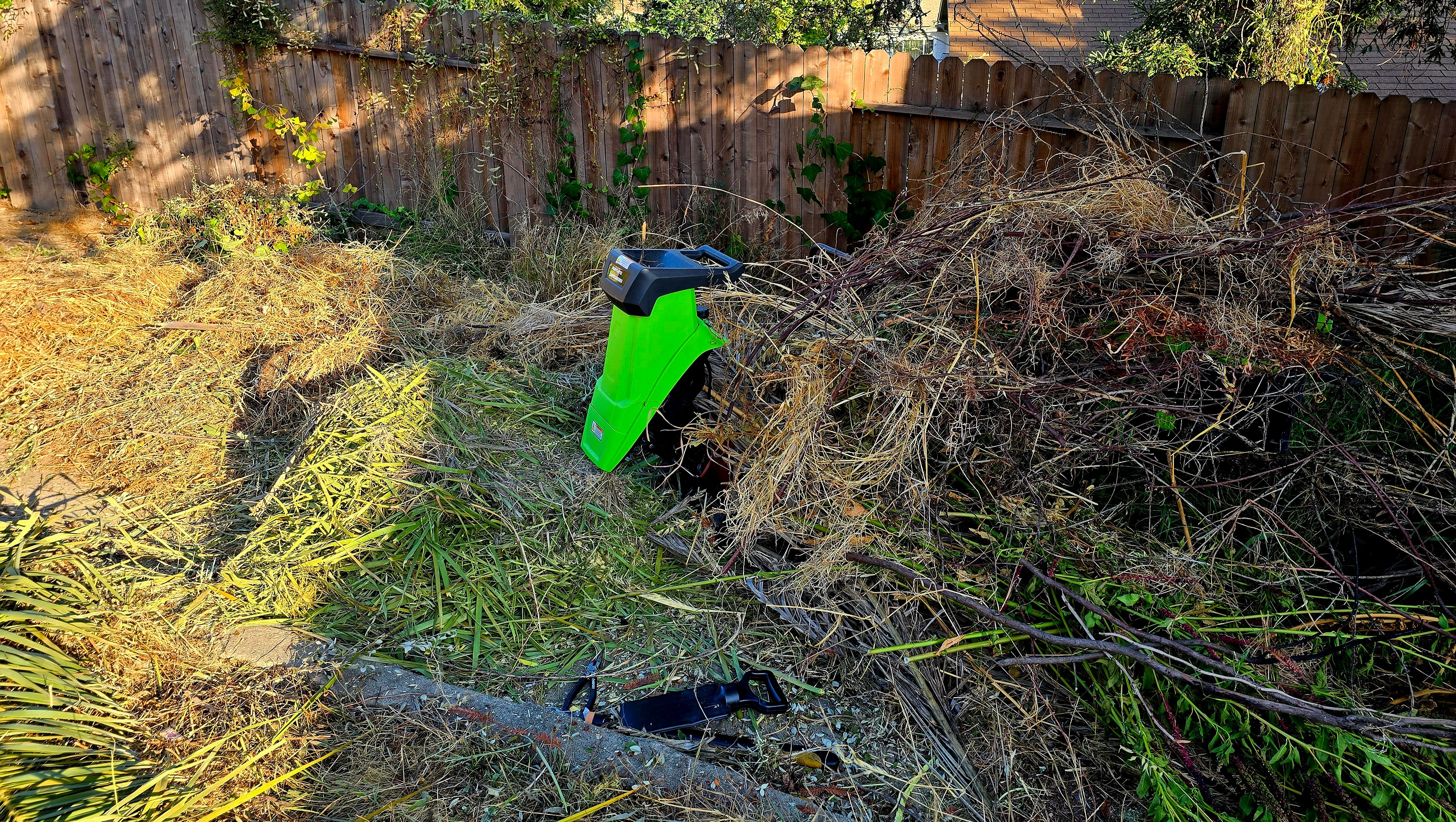
Thank you everyone!
With your help I was able to get a wood chipper and shred the pile of biomass resulting from clearing the greenhouse site. Species present include french broom, cotoneaster, pokeweed, tamarisk, redwood, date palm, wild oats, ripgut brome and red pepper tree.
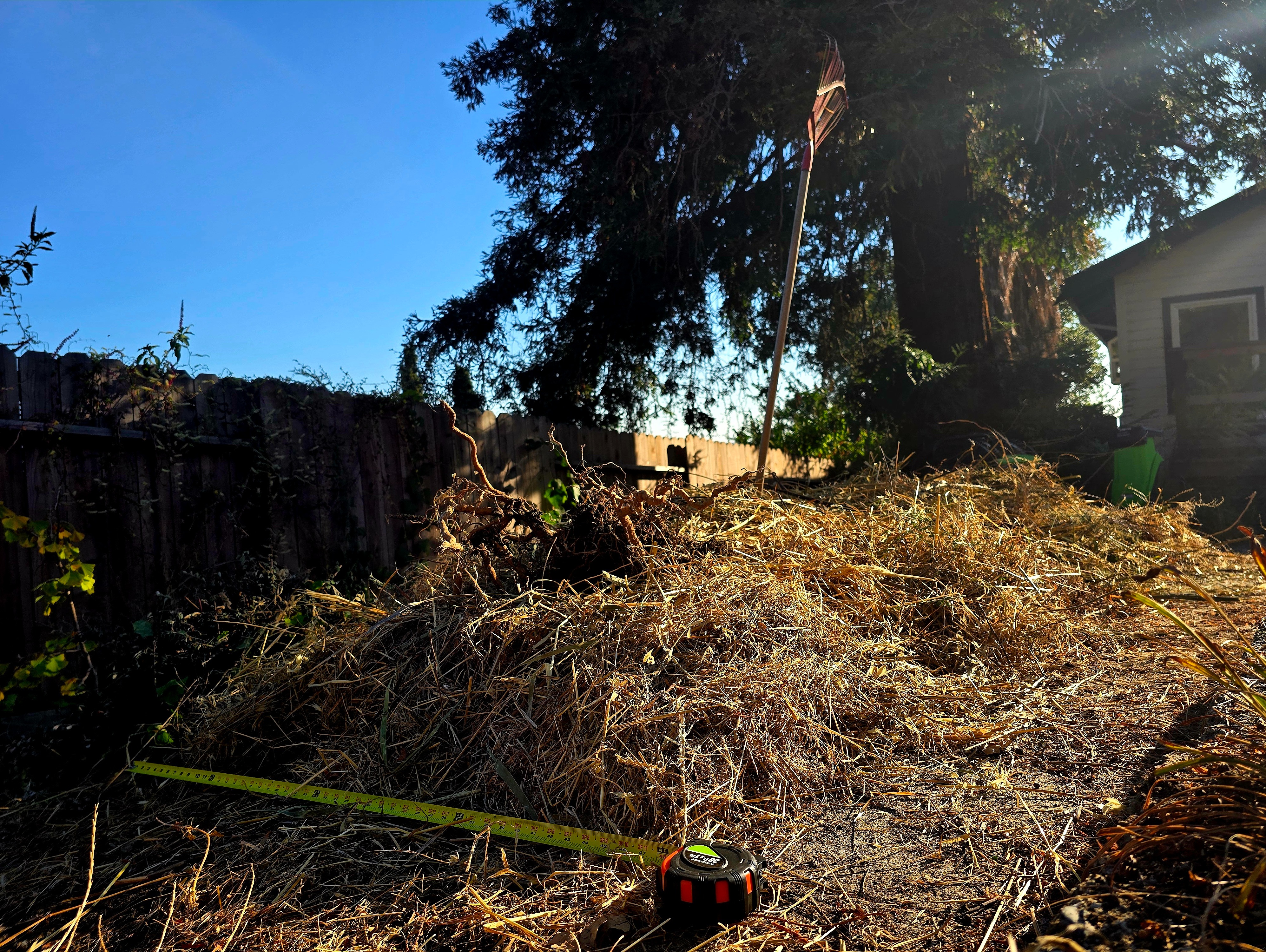
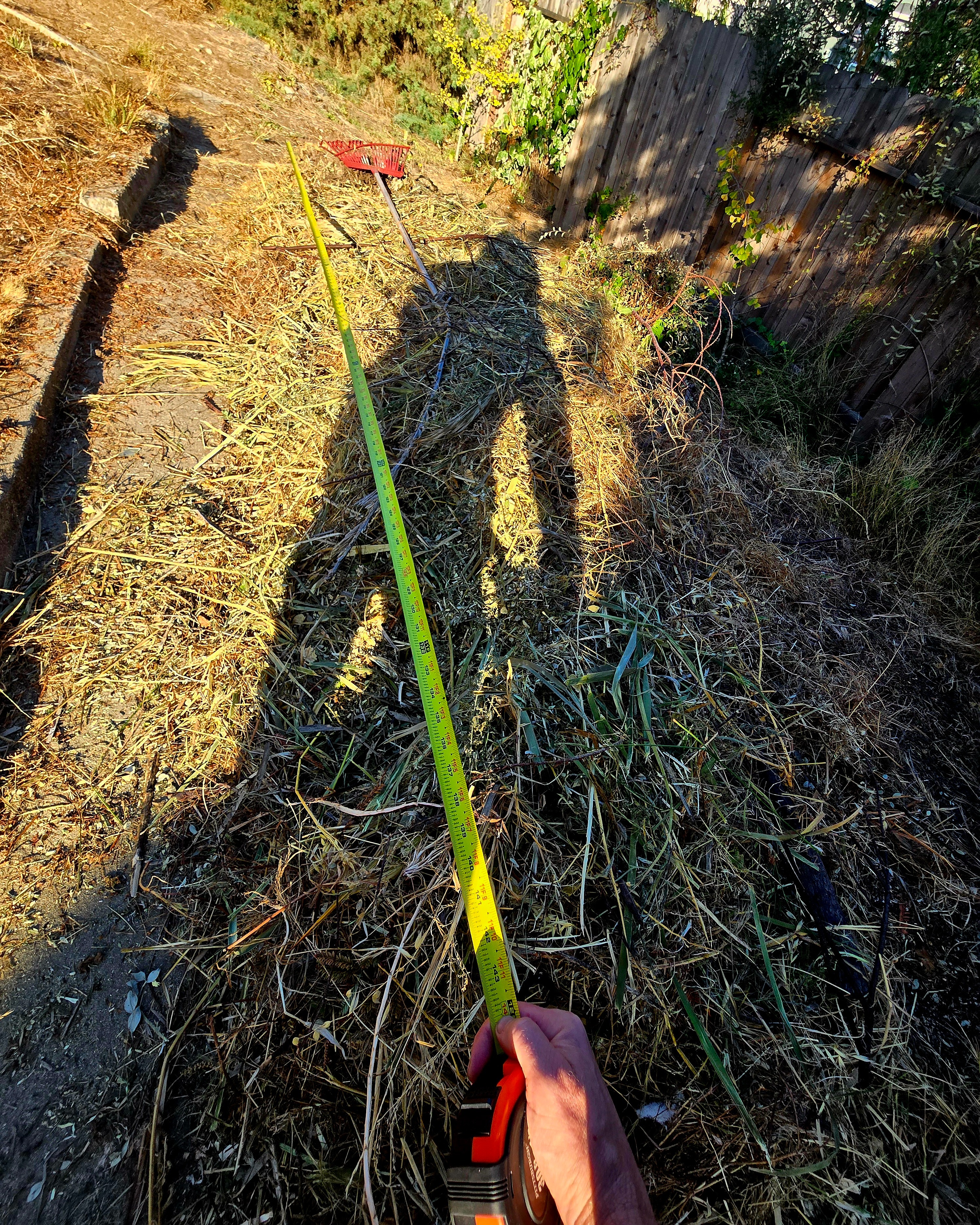
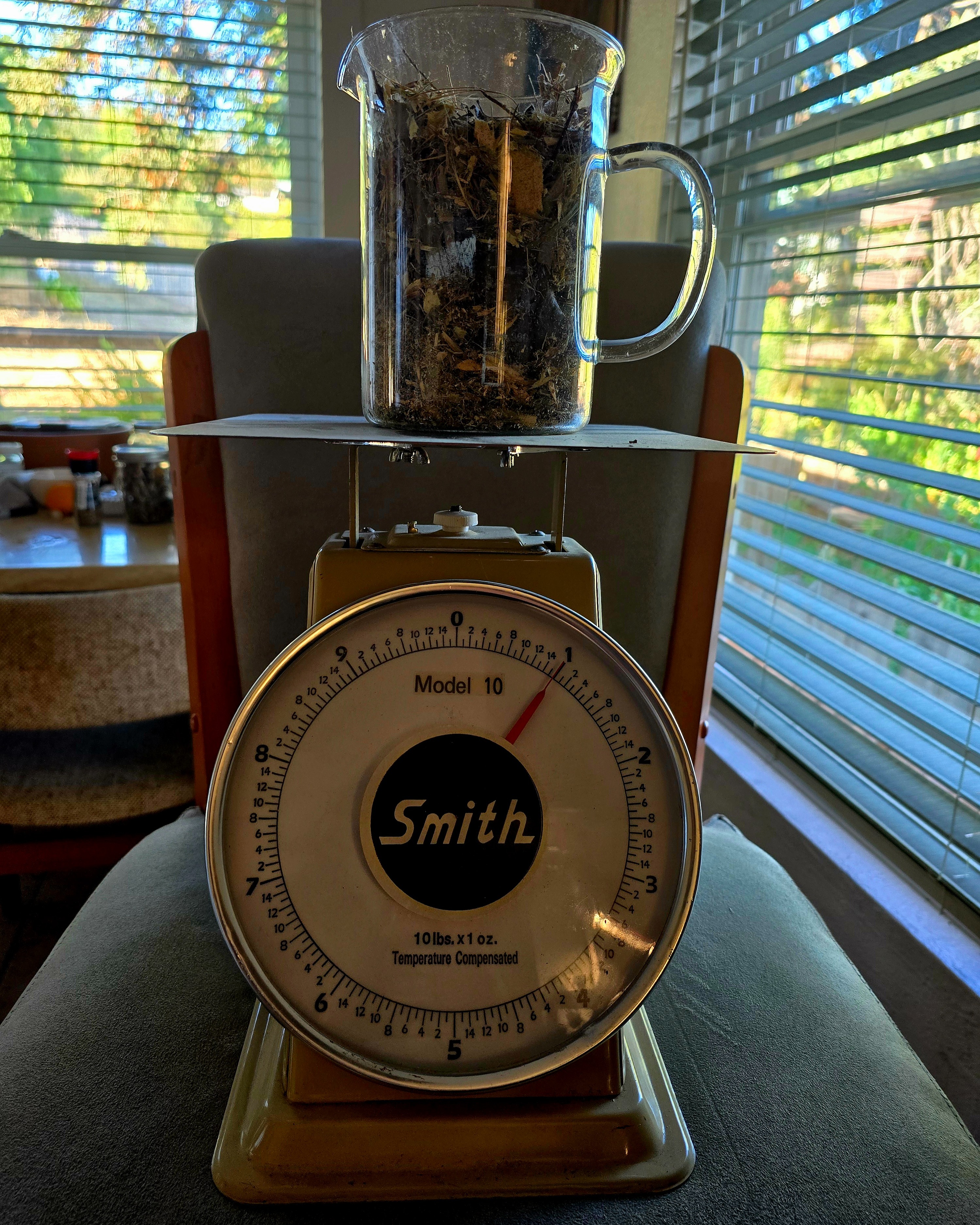
This produced a 12'X4'X16" deep pile of mulch, or 64 cubic feet. At a density of 4.8oz/l this is a mass of 544lbs, or 247kg.
Roughly half of this consists of dry grasses and branches, the other half is fresh woody vegetation, so around 1/4 of this mass is water, giving 185kg of dry biomass. At average proportions, this contains 93kg of carbon.
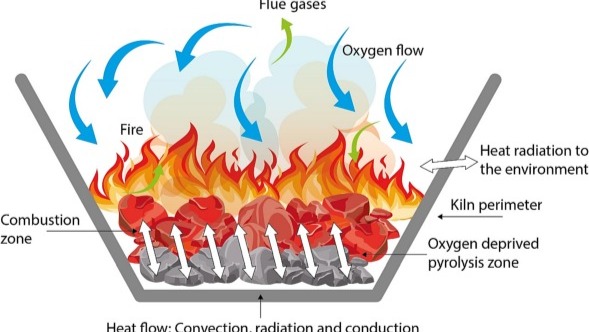
The best way to permanently fix as high a proportion of this carbon as possible is to convert it to its elemental form through the action of heat in the absence of oxygen, this will convert all substances other than carbon into gases that will boil from the wood chips and in their burning provide heat to sustain the process.
This is called pyrolysis, or dry distillation, and creates biochar as an output. Biochar is an excellent soil amendment, regulating pH, retaining nutrients, and improving soil structure. As elemental carbon, it is mostly inert from a biological and chemical perspective, and so the carbon it contains is unlikely to return to the atmosphere in the next 1000 years at least.
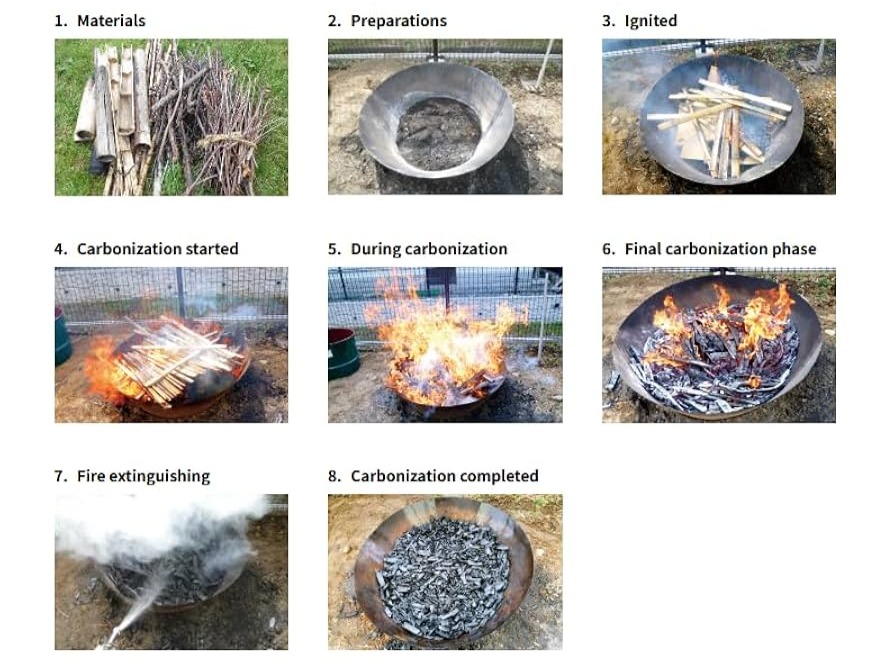
To make char, heat has to be applied in an oxygen deprived environment. The method usually used is the Top Lit Updraft Gasifier, consisting of 2 nested metal containers and a stove pipe. The drawbacks of this method are that it is a batch process and does not scale smoothly, while also sacrificing a portion of the biomass as fuel. I am interested in testing a different method, a conical kiln based on Japanese charcoal manufacturing methods.
Reported efficicency ranges between 25 and 50%. Another $400 will enable me to get a conical kiln, an essential piece of equipment for the nonprofit which will be used heavily, and will permanently remove between 24 and 47kg of carbon from the atmosphere while producing a soil amendment to grow more super aspens! All efficiency data will be recorded.
This also represents a small scale test of the integrated coppicing and char production system that will be deployed on planting sites.